


 English
 Español
Runtime on a solar flood light is decided long before anyone flips a switch. The panel has to harvest, in a single day, more energy than the lamp spends in a single night, and the battery has to hold...
READ MORE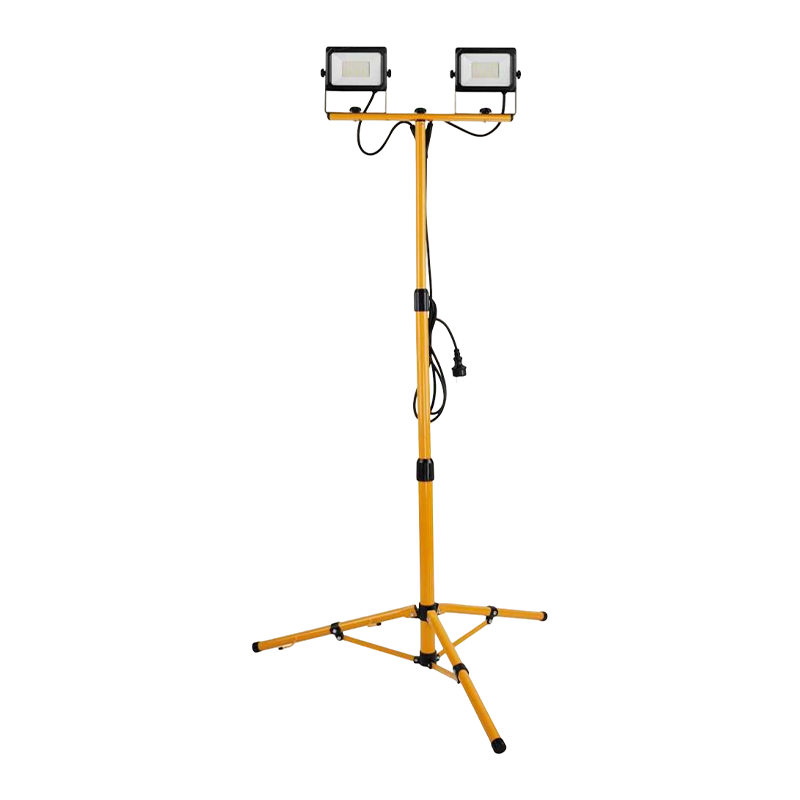
The TBA-ES2 twin-head tripod work light is built for large job sites where a single beam falls short of the coverage needed. Each head rotates and tilts independently, so one unit can illuminate an area that would otherwise require two separate single-head fixtures, cutting down on the number of devices and power outlets needed on site.
The height-adjustable tripod stand lets crews raise or lower the beam angle to match scaffolding, uneven ground, or changing work levels throughout a shift. The wide-set tripod base provides a stable footprint even on slightly irregular surfaces, and with the two heads splitting the coverage area, shadowed blind spots within the work zone are noticeably reduced compared with a single-head configuration.
A built-in switch controls the light directly at the fixture, so the plug stays seated in the outlet rather than being pulled and reinserted throughout the day. This matters most on jobs where the light gets turned on and off repeatedly — overnight security rounds, intermittent inspection work, or stop-start repair tasks — where a dedicated switch reduces wear on both the plug and the socket, and lowers the risk of a loose connection developing over time.
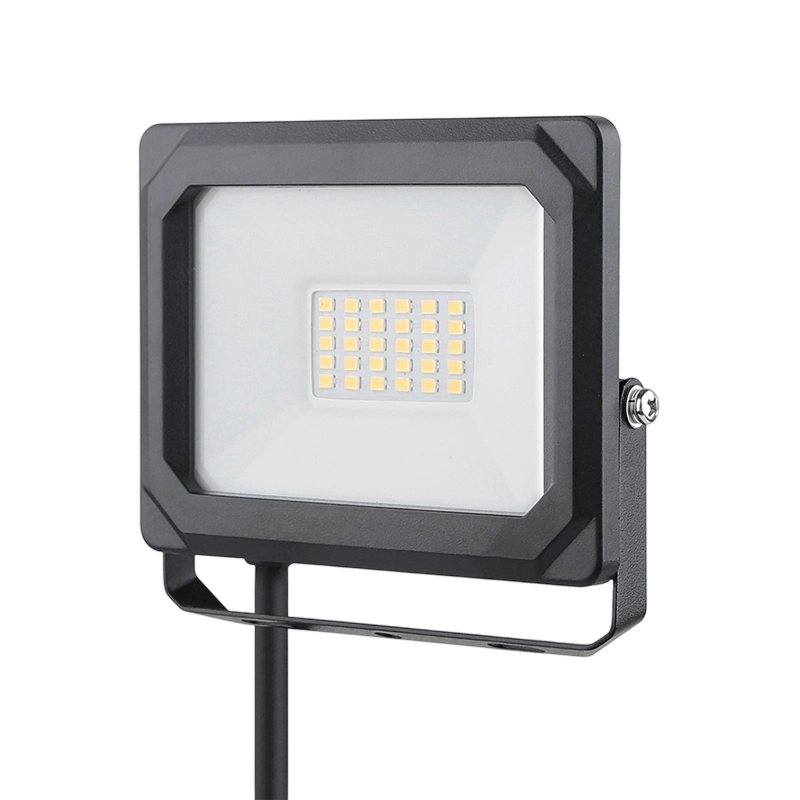
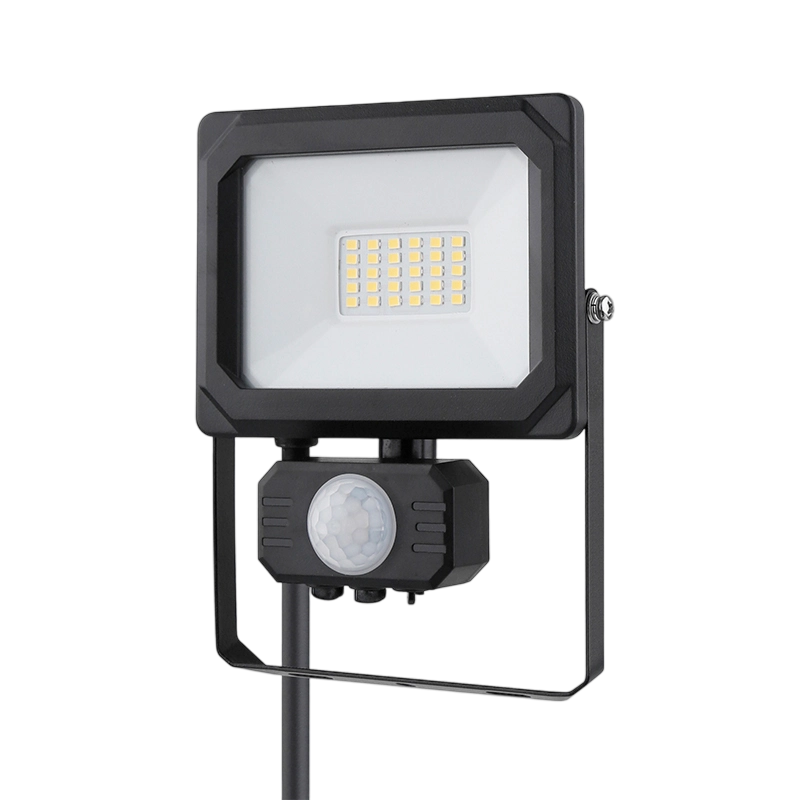
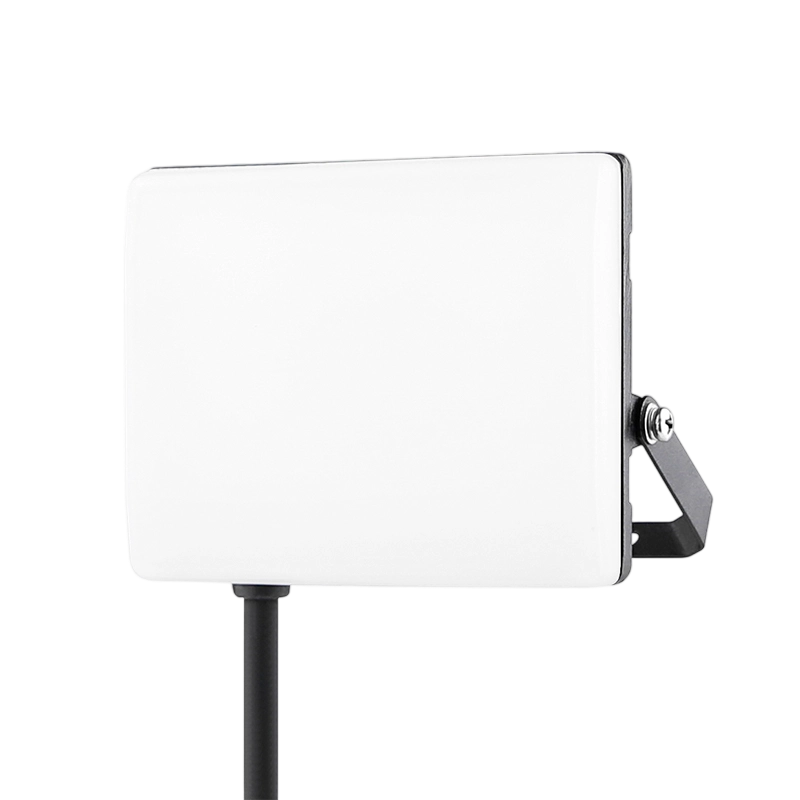
Construction-wise, the die-cast aluminium housing dissipates heat efficiently, keeping brightness consistent through extended continuous operation rather than dimming as the unit warms up. The tempered-glass front on each head resists flying debris and minor impacts common on active job sites, while the ABS frame around the body absorbs shock from drops and knocks during transport or handling. Together, the three-material construction keeps the fixture structurally sound through the kind of rough treatment that shortens the life of lighter-duty work lights.
Setup takes only a few minutes: the tripod legs unfold and lock in place without tools, and the twin-head bracket can be repositioned by hand to whatever angle the task calls for. Crews moving between multiple stations on the same site tend to prefer this fixture over separate single-head lights simply because one carry, one setup and one power connection cover twice the ground — a small efficiency gain that adds up across a long shift or a multi-day project.
Overview
1. 10–100 W, AC 220–240 V.
2. 6500K LED, up to 110 lm/W.
3. Adjustable tripod; single or twin-head options.
4. IP65 lamp, IK06; with on/off switch and 2-year warranty.








Runtime on a solar flood light is decided long before anyone flips a switch. The panel has to harvest, in a single day, more energy than the lamp spends in a single night, and the battery has to hold...
READ MORELumens: The Output Number, and What It Does Not Promise Lumens describe the total amount of visible light leaving the lens of a flood light. That is all the number means, and it is worth being precis...
READ MOREThe Short Answer: Flood Lights Are the Better Exterior Choice For the outside of a warehouse, an LED flood light works better than an LED high bay light in almost every situation. Flood lights are b...
READ MOREThe Short Answer: Sun In, Battery Charged, LEDs On at Dusk A solar LED light works in four steps: a photovoltaic panel turns sunlight into electricity, a charge controller sends that power into a rec...
READ MORE86-15824503948
No.173 Binhai 2nd Road, Hangzhoubay economy development Zone,Ningbo,Zhejiang Province,China
Copyright ©Ningbo Hengjiu Lighting Co., Ltd.All rights reserved.
 OEM/ODM TBA-ES2 Dual-Head Adjustable Tripod LED Work Light Factory
