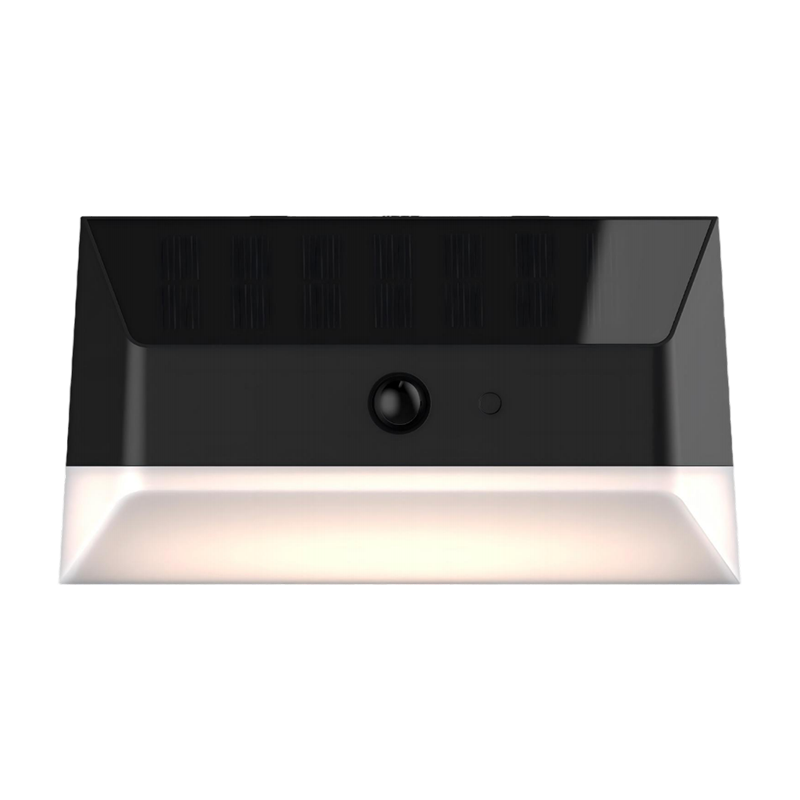
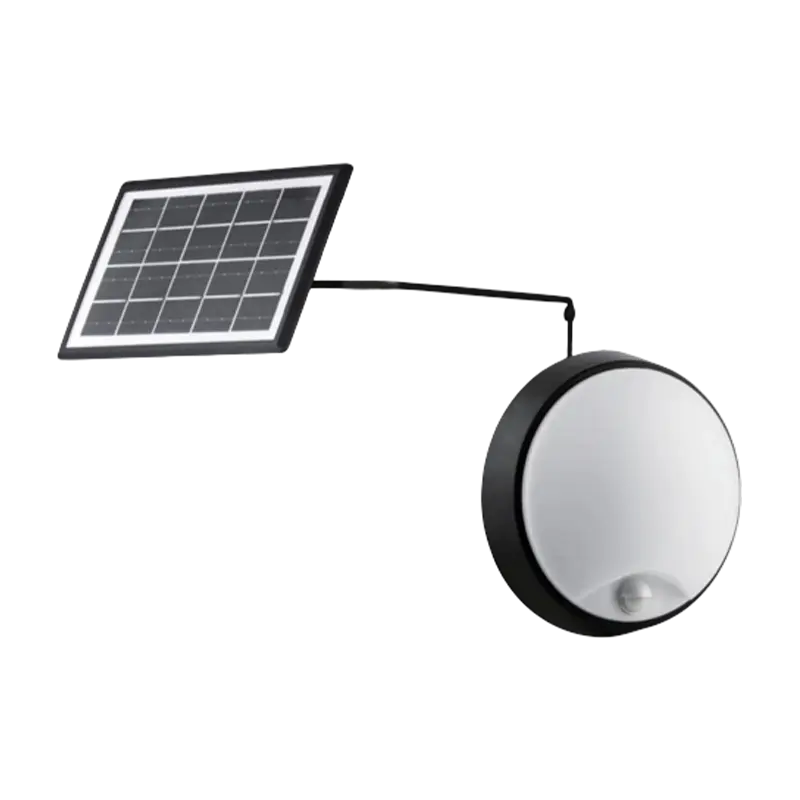
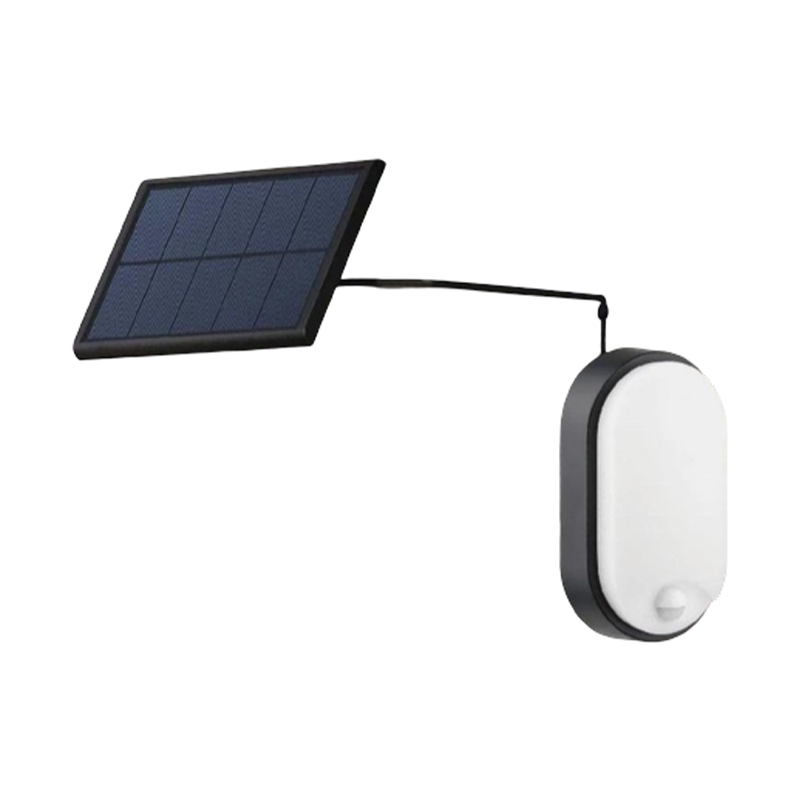
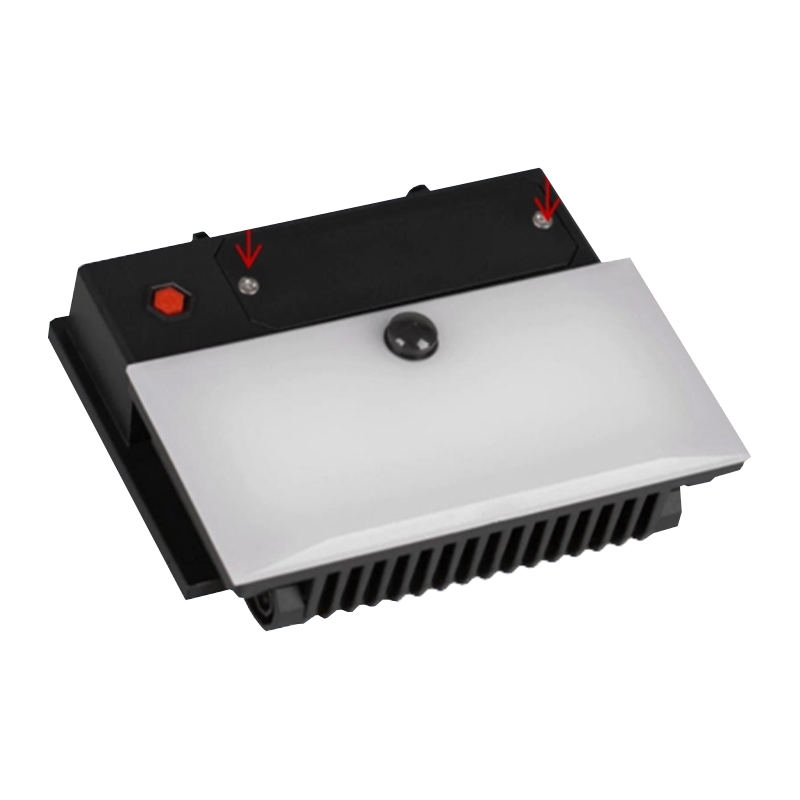
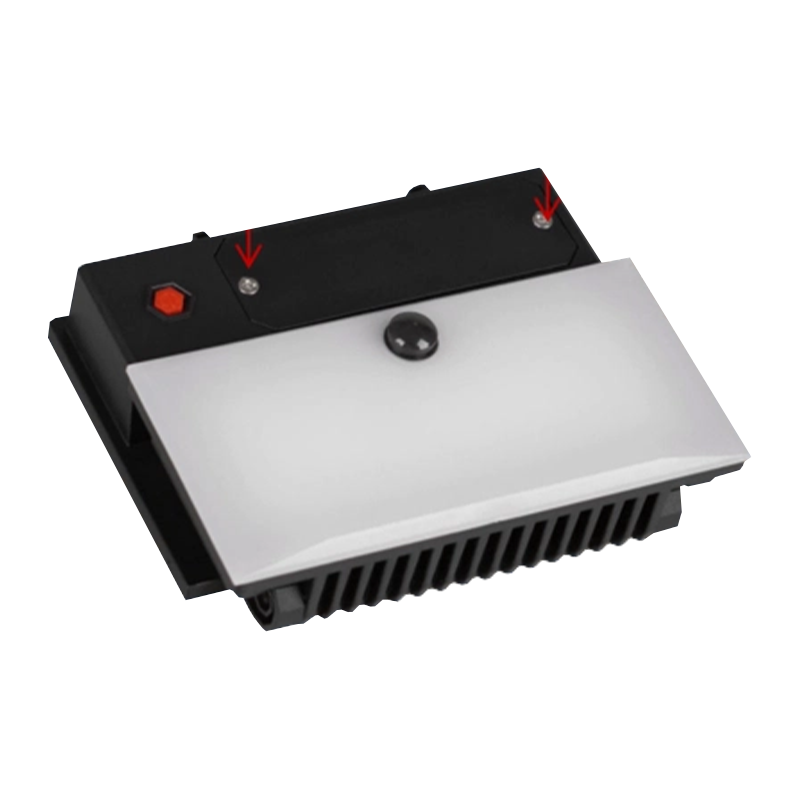
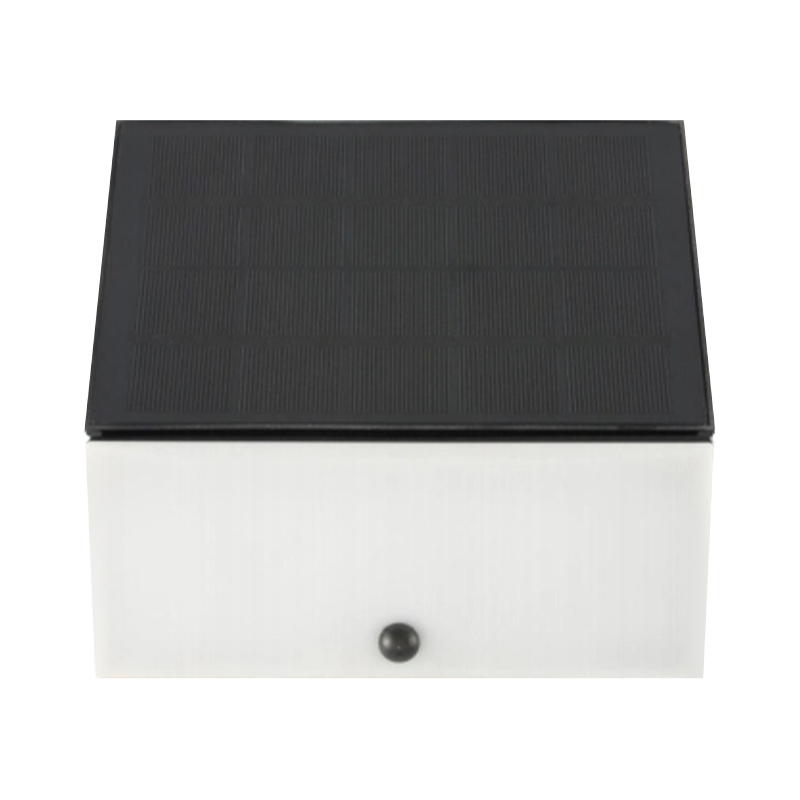
Ningbo Hengjiu Lighting Co., Ltd. is a high-tech outdoor lighting enterprise based at No.173 Binhai 2nd Road, Hangzhou Bay Economic Development Zone, Ningbo, Zhejiang. As a China LED Solar Light manufacturer, we develop, tool and assemble the complete family in our own workshops: solar decorative wall lights, PIR solar bulkheads and solar wall lights with integrated, removable or remote solar panels. The range exists for projects that need perimeter, fa?ade or circulation lighting where trenching mains cable is impractical, costly or simply not permitted.
Series fundamentals
- ABS lamp bodies with high-impact PC diffusers, sealed to IP65
- Up to 500 lm output; 0.75 W to 1.6 W solar panels; 1,500 mAh to 2,000 mAh lithium-ion batteries
- PIR detection at a 100° angle and 4–5 m range, with three selectable lighting modes
- 3CCT adjustable 3000K / 4000K / 6500K versions and optional USB-C emergency charging
- Published series data: 25,000-hour rated life and 1-year warranty
Our LED Solar Light Range
Each series solves a different mounting and coverage problem. Selection normally starts with the wall surface, the required luminous level and how long the fitting must stay lit between charging cycles.
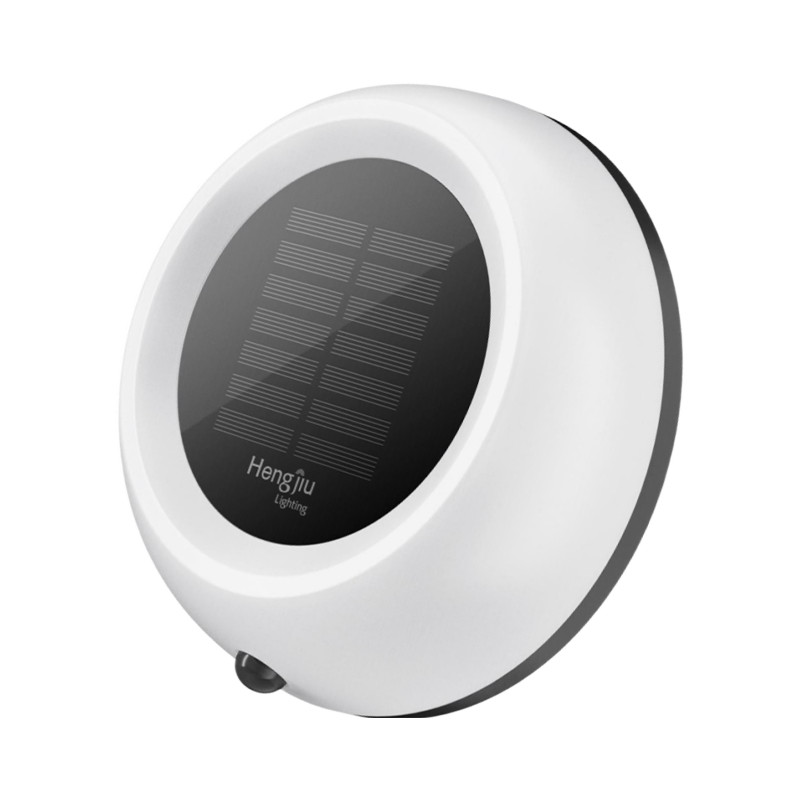
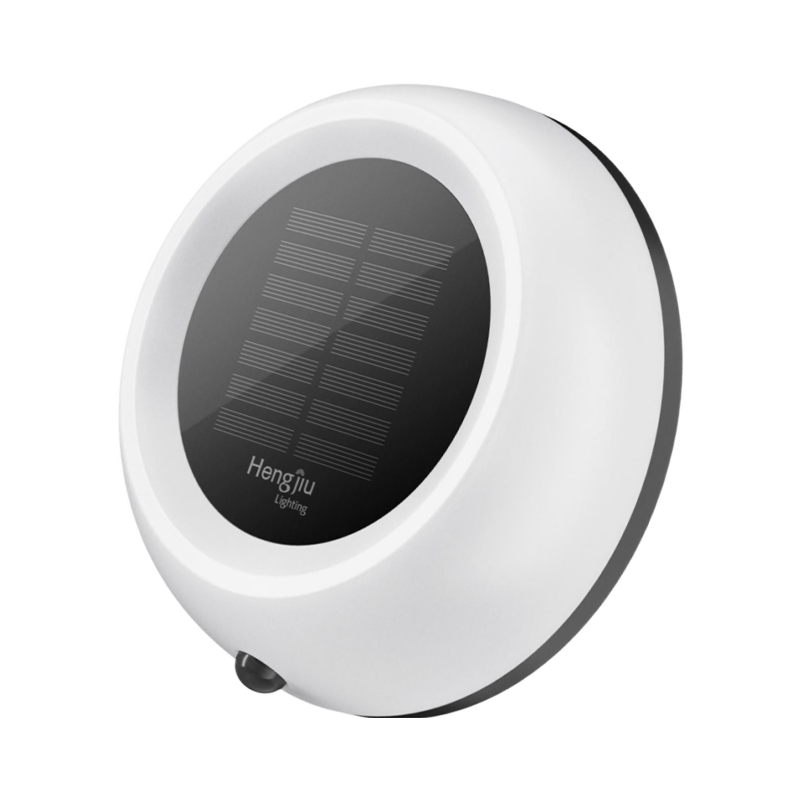
BSY Series — Round Solar Decorative Wall Light, IP65
Ring-shaped diffuser with an integrated solar panel, up to 300 lm from a 0.75 W panel and 1,500 mAh battery. The circular form reads as a decorative element on a residential fa?ade, so it suits entrances, gardens, corridors and exterior wall faces where the fitting is visible in daylight.
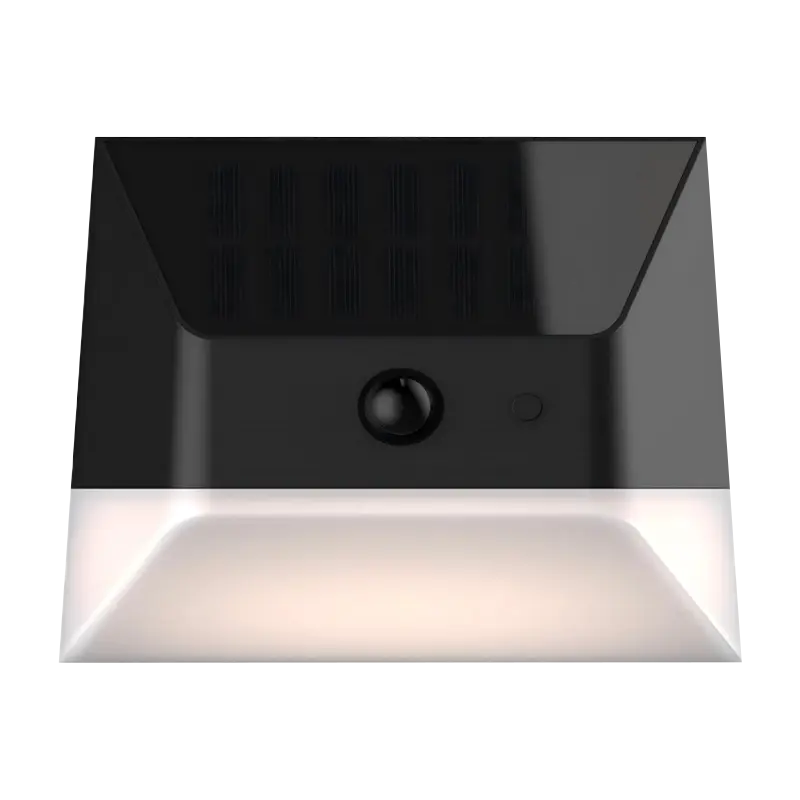
BST Series — Compact Solar Decorative Wall Light, IP65
Front-mounted 1 W panel, 1,800 mAh battery and downward light distribution, up to 300 lm. The PIR sensor raises brightness on detection and returns to standby or off after a 20 ±5 s delay. Compact footprint for porches, boundary walls, patios and narrow pier faces.
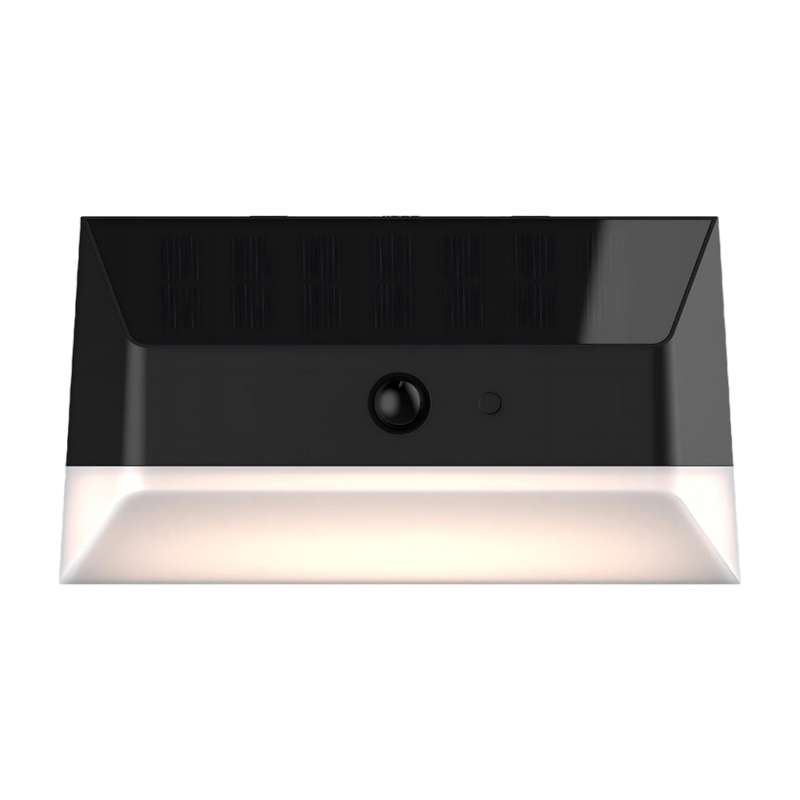
BSF Series — High-Output Solar Decorative Wall Light, IP65
Dual solar panels and a wider downward distribution deliver up to 500 lm from a 1.6 W panel and 2,000 mAh battery. The dusk-to-dawn mode includes a 35 lm low-glow standby, which makes this the natural choice for property-management routes, garden boundaries and wide-area perimeter lighting that must hold output through several overcast days.
FSY and FST-P1 — PIR Solar Bulkheads
The FSY Single CCT PIR Solar Bulkhead is the single colour temperature option in the family; the FST-P1 Motion-Sensor Oval Solar Bulkhead uses an oval bulkhead format. Both are aimed at corridors, stair landings, service doors and back-of-house walls where an even, robust wall-mounted fitting is preferred over a decorative shape.
SAS Solar Wall Lights — Three Panel Architectures
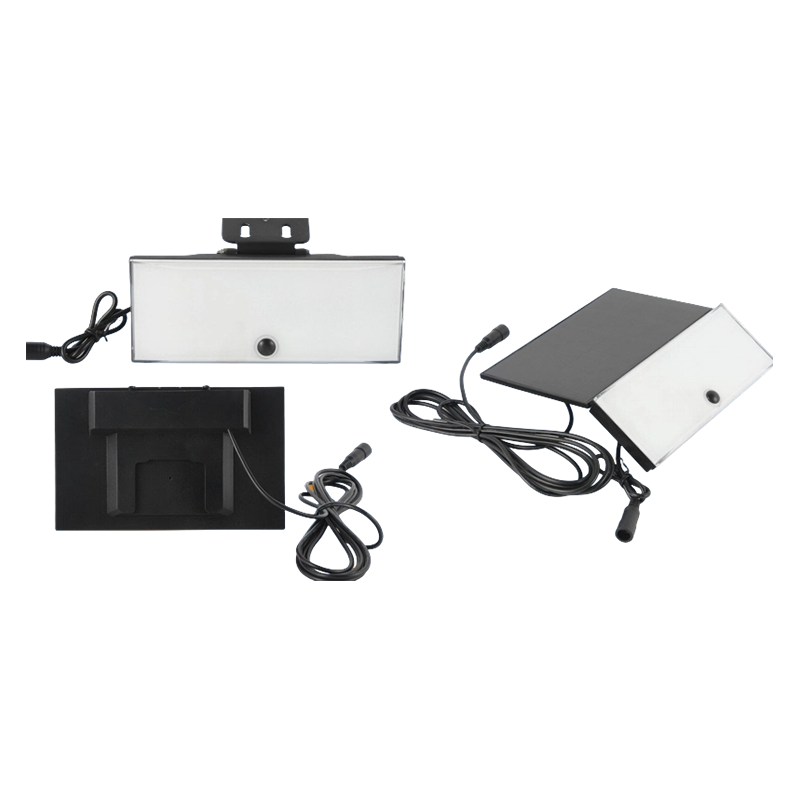
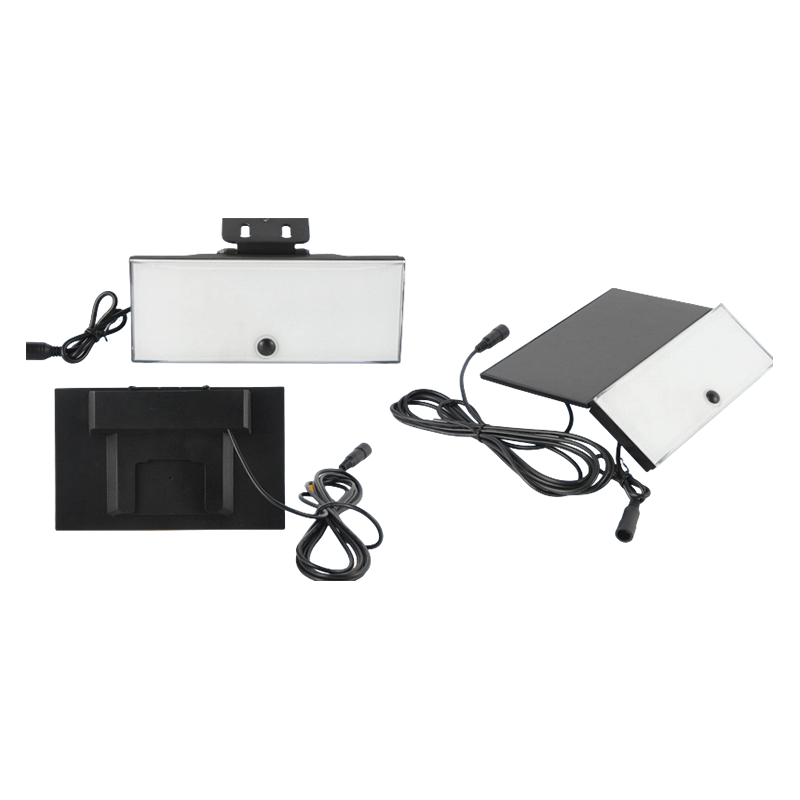
The SAS family gives the same lighting function three different energy arrangements: the Compact Removable-Battery version for sites where battery replacement without dismounting is useful, the High-Output Integrated-Panel version for maximum collection in one housing, and the SAS Remote-Panel Solar Wall Light for walls that stay in shade while the panel can be placed a short distance away in daylight.
Series Comparison at a Glance
| Series |
Format |
Published specification |
Typical application fit |
| BSY |
Round decorative wall light |
300 lm max, 0.75 W panel, 1,500 mAh, 100° PIR at 4–5 m |
Entrances, corridors, garden walls, visible residential fa?ades |
| BST |
Compact wall light, front panel |
300 lm, 1 W panel, 1,800 mAh, 20 ±5 s hold time, models BST3S / BST3SU |
Porches, patios, boundary walls, pier faces |
| BSF |
High-output wall light, dual panels |
500 lm, 1.6 W panel, 2,000 mAh, 35 lm dusk-to-dawn standby, models BSF5S / BSF5SU |
Perimeter routes, garden boundaries, managed open space |
| FSY |
Solar bulkhead |
Single CCT with PIR motion sensor |
Corridors, stair landings, service doors |
| FST-P1 |
Oval solar bulkhead |
Motion-sensor control, IP65 housing |
Back-of-house walls, walkways, plant areas |
| SAS |
Wall light, three panel architectures |
Compact removable battery, high-output integrated panel, or remote panel |
Shaded walls, battery-service access, high-collection locations |
Solar Panel, Battery and Runtime Engineering
Autonomy is decided long before the fitting leaves our line. Panel wattage, battery capacity, the lighting mode selected on site and the number of sun hours the wall actually receives must agree, otherwise a well-specified luminaire will still fade in a grey week. This is why we treat the mode setting as an engineering parameter rather than a user preference.
- Panel classes: 0.75 W (BSY), 1 W (BST) and 1.6 W (BSF) solar panels cover decorative, compact and high-output duties respectively.
- Battery classes: 1,500 mAh, 1,800 mAh and 2,000 mAh lithium-ion cells are matched to the panel and driver so charge and discharge stay balanced.
- Mode impact: motion-activated output draws energy only during detection windows, which extends runtime compared with continuous full output.
- Standby lighting: the BSF dusk-to-dawn mode runs a 35 lm low glow, keeping baseline visibility at a fraction of the peak load.
- Overcast reserve: larger battery versions hold output through consecutive cloudy days, and optional USB-C charging provides a manual top-up path.
Materials, IP65 Sealing and Mechanical Buildup
Solar models in this range use ABS lamp bodies with high-impact opal polycarbonate diffusers. That combination keeps weight low on fa?ade fixings, resists UV discolouration over long outdoor exposure and holds the structural shape around the panel and sensor apertures. Diffusers are high-impact grade because wall-mounted fittings take knocks from ladders, cleaning equipment and site traffic.
Metal-bodied luminaires elsewhere in our LED Series pass through high-pressure die casting, mechanical and chemical polishing, CNC edge grinding and CNC drilling with thread tapping held to ±0.05 mm for wiring channels and corrosion-resistant screw threads. Solar housings skip the mains wiring path but inherit the same assembly discipline: gasket seating, screw torque and diffuser alignment are controlled so the IP65 rating is repeatable across production, not just on a prototype.
PIR Sensing, Lighting Modes and Colour Temperature
Across the BSY, BST and BSF series the PIR sensor covers a 100° detection angle at a 4–5 m range, and three working modes are available: low-level standby that brightens on movement, motion-only operation, and continuous dusk-to-dawn lighting. Matching the mode to the actual traffic pattern is the single most effective way to keep a solar fitting charged on a shaded or heavily used wall.
- 3CCT adjustable: 3000K, 4000K and 6500K selectable on the BSY, BST and BSF series for fa?ade, garden and security contexts.
- Single CCT: the FSY solar bulkhead is offered with a fixed colour temperature where site consistency matters more than flexibility.
- Hold time: BST versions return to standby or switch off after a 20 ±5 s delay once the area clears.
- Detection aim: sensor angle should follow the approach path — gates, steps and doorways rather than open ground.
Installation, Mounting and Commissioning
These luminaires are wiring-free. Commissioning is a mechanical fixing, a panel orientation check and a mode selection — no conduit, no distribution board and no electrician on site. Wall brackets, screw positions and diffuser clearances are set so the fitting can be mounted directly to masonry, render, timber cladding or prefabricated panels.
- Confirm the panel face holds a clear daylight path before drilling; a shaded panel is the most common cause of reduced runtime.
- For the SAS Remote-Panel version, fix the panel where collection is highest and run the supplied lead to the luminaire position.
- Mount height should follow the detection envelope: 4–5 m range at a 100° angle covers a doorway approach at typical wall heights.
- Test each unit after installation by triggering the sensor and confirming the selected mode behaves as intended.
Quality Control and Compliance Evidence
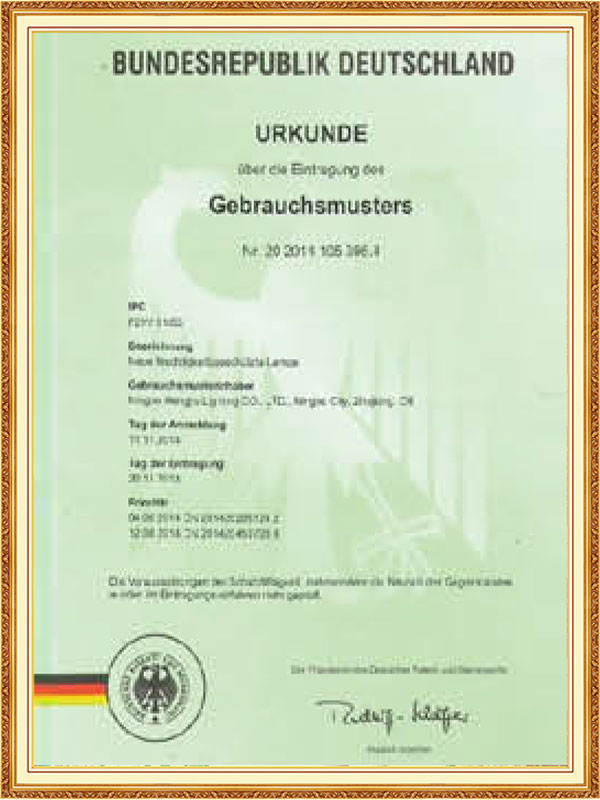
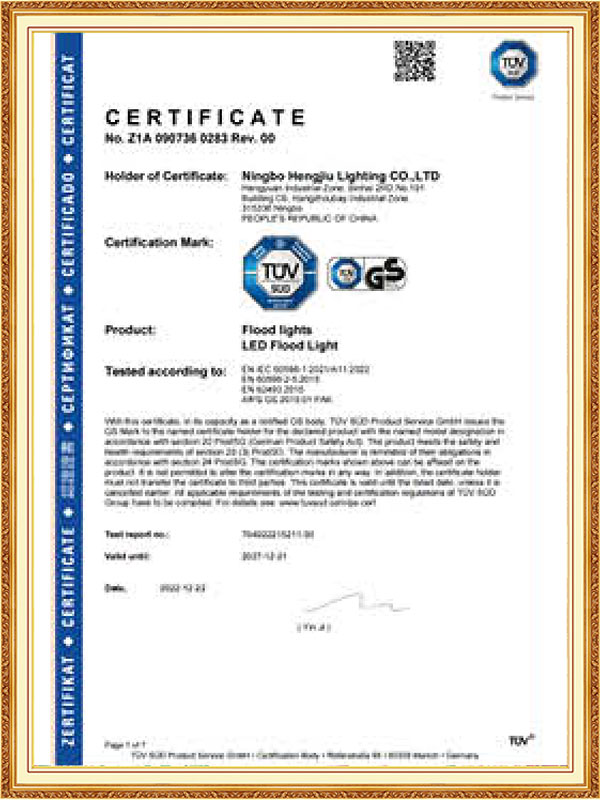
We operate under ISO 9001 quality management and ISO 14001 environmental management, with BSCI social compliance, and hold national high-tech enterprise recognition. Production is supported in-house by metal spraying, injection moulding, SMT, assembly, warehouse and laboratory functions, which keeps battery, driver and sensor performance under our own control rather than a subcontractor's.
Outdoor luminaires go through environmental testing before release, and our published engineering figures include an on-time delivery rate above 98% and a defective rate below 1%. Most of our outdoor lighting products carry GS, CE, EMC, ERP, ROHS, REACH, PAHS, CB and SAA approvals issued through TUV, BV, SGS and DEKRA; solar models are supplied to the approval set applicable to the destination market.
Information We Use to Configure Your Solution
A workable solar configuration comes from the site, not from a catalogue page. These are the inputs we apply when preparing a proposal.
| Project input |
What we set from it |
| Mounting surface, wall height and fixing method |
Series format (round, compact, high-output, bulkhead, oval) and bracket choice |
| Daylight hours available at the panel position |
Panel wattage class and whether an integrated, removable or remote panel is required |
| Required illuminance and coverage width |
Lumen level selection from 300 lm to 500 lm classes |
| Nightly operating hours and traffic pattern |
Battery capacity and lighting mode programming |
| Colour temperature requirement |
3CCT adjustable or single CCT build |
| Detection zone: gate, stair, doorway or open boundary |
PIR orientation, hold time and standby level |
| Destination market and approval requirement |
Applicable approval set and documentation package |
| Branding, packaging artwork and order quantity |
Logo application, colour box design and production scheduling |
OEM/ODM, Packaging and Delivery Scope
We provide OEM and ODM development for outdoor lighting, covering the full lifecycle from design and prototyping through small-batch trial production to mass manufacture. Housing form, colour temperature behaviour, sensor programming, logo application and retail packaging can all be aligned to a programme. Colour box artwork can carry the FSC logo where the customer holds that certification.
Sample orders are typically produced in 3–7 working days so a fitting can be reviewed on site before commitment. Mass production runs 30–45 days after deposit and packaging artwork confirmation, with a normal minimum of 1,000 pieces per item; smaller batches are accepted. Shipments move by air in 3–7 days or by sea in 25–35 days as FCL or LCL. Complementary powered ranges — including our LED Bulkhead light series — allow a single project to mix solar and mains fittings under one supply schedule.
Frequently Asked Questions
Do you manufacture the solar lights yourselves, or source them?
Every solar luminaire in this series is produced in our own Ningbo factory, where injection moulding, SMT, assembly and laboratory testing run in-house under ISO 9001 management. Solar production was added in 2022 and supported by the 2023 factory relocation and expansion, so the range is built on the same production base as our bulkhead and floodlight lines rather than bought in complete.
Which series should be used for garden boundaries versus corridors?
Boundary and perimeter routes normally take the BSF high-output series, because 500 lm from a 1.6 W panel and 2,000 mAh battery with a 35 lm dusk-to-dawn standby covers wider ground and longer nights. Corridors, stair landings and service doors are better served by the FSY or FST-P1 solar bulkheads, which give even wall-mounted distribution in a more robust housing.
Will the lights keep working through cloudy weather?
Runtime in low-sun conditions depends on the balance between panel wattage, battery capacity and the selected mode. The BSF series carries the largest panel and battery in the range specifically for this, and USB-C charging can be specified on BSY, BST and BSF versions as a manual top-up option during extended overcast periods. Selecting motion-activated output instead of continuous full brightness reduces nightly draw considerably.
Can 3CCT switching and PIR motion sensing be combined?
Yes. The BSY, BST and BSF series combine 3CCT adjustable output with PIR sensing, so a single fitting can be set to 3000K, 4000K or 6500K and to low-level standby, motion-only or dusk-to-dawn operation. Where the specification calls for one fixed colour temperature across a large installation, the FSY single CCT solar bulkhead keeps that consistency simpler.
What happens if a wall is shaded during most of the day?
The SAS Remote-Panel Solar Wall Light separates the photovoltaic panel from the luminaire, so the light can stay on the shaded wall while the panel is fixed where collection is strongest. Where the constraint is instead battery servicing rather than shade, the SAS Compact Removable-Battery version allows the cell to be changed without dismantling the luminaire from the wall.
What information should accompany a request for a solar lighting proposal?
Application and mounting surface, wall height, available daylight at the panel position, required light level and coverage, nightly operating hours, colour temperature, destination market and approval requirement, branding and packaging needs, and expected order quantity. With those inputs we can select the series, fix the panel and battery class, set the lighting mode and confirm the quotation without a second round of clarification.



 English
 Español