

 English
 Español
The Short Answer: Flood Lights Are the Better Exterior Choice
For the outside of a warehouse, an LED flood light works better than an LED high bay light in almost every situation. Flood lights are built for outdoor weather, wide horizontal beam spread and wall or pole mounting. High bay lights are designed to hang from ceilings 20 to 45 feet high and push light straight down onto aisles, racks and floors. Used outdoors, they waste light, struggle with rain and dust, and leave dark patches along walls and yards.
The only real exceptions are open canopies, covered loading bays and similar roofed areas, where a sealed high bay fixture can sit under a ceiling. For loading docks, perimeter walls, truck yards and parking areas, a properly rated flood light is the practical answer. The rest of this article explains why, with numbers you can use when specifying fixtures.
How the Two Fixtures Are Designed Differently
The two fixtures look similar on a spec sheet because both are high-output LED products. Their optical and mechanical design, however, serves different jobs.
LED Flood Light Design
A flood light uses a flat or slightly curved LED module behind tempered glass, mounted on an adjustable yoke. The yoke lets you tilt the fixture up or down by up to 180 degrees, so you can aim light at a wall, a gate or a truck apron. Typical beam angles run from 60 to 120 degrees, and many models are built to stay sealed in rain, snow and dust.
LED High Bay Light Design
A high bay light is usually round (a UFO shape) or linear, and it hangs from a hook, chain or pendant. Its optics push light downward in a symmetrical pattern, often with a 90 to 120 degree beam. Output is very high, commonly 15,000 to 40,000 lumens, because the light has to travel a long way to reach a warehouse floor. Many indoor-focused models have only an IP20 to IP54 rating, which is not enough for exposure to the weather.
| Feature | LED Flood Light | LED High Bay Light |
|---|---|---|
| Typical mounting | Wall, pole, bracket | Ceiling hook, chain, pendant |
| Aiming | Adjustable yoke | Mostly fixed, pointing down |
| Common IP rating | IP65 to IP66 | IP20 to IP65 |
| Typical output | 3,000 to 30,000 lumens | 15,000 to 40,000 lumens |
| Best use | Outdoor perimeters and yards | Indoor high ceilings |
Beam Angle and Light Distribution Outdoors
Outdoor lighting around a warehouse is mostly a horizontal problem. You need to light a long wall, a dock apron or a strip of asphalt, not a column of air that ends at a floor. Flood lights suit that task because their asymmetric or wide beams spread light sideways across the target area.
A high bay light mounted on an outside wall behaves very differently. Its symmetrical downward pattern creates a bright hot spot directly below the fixture and a sharp falloff a few meters away. In practice, this means a bright circle on the ground and dark gaps between fixtures. To cover a 100-meter wall at a minimum of 10 lux, you might need roughly one flood light every 15 to 20 meters, but a high bay light would need to be spaced much closer to avoid dark zones, and it would still glare into drivers' eyes.
Flood lights also allow tighter control through aiming. A 90-degree beam tilted 30 degrees down from a 6-meter wall bracket can light a dock lane about 8 to 10 meters out, with limited light spill onto neighboring property. That helps with local light-pollution rules and neighbor complaints.
Brightness, Wattage and Mounting Height
Matching fixture output to mounting height is where many warehouse projects go wrong. Exterior wall heights are often lower than interior ceilings, commonly 4 to 9 meters, which means you rarely need the very high output of a typical high bay light.
| Mounting Height | Area Type | Suggested LED Flood Light | Target Level |
|---|---|---|---|
| 4 to 5 m | Walkways, small side doors | 30 to 50 W | 5 to 10 lux |
| 6 to 7 m | Loading docks | 100 to 150 W | 50 to 100 lux |
| 8 to 10 m | Truck yards, parking | 200 to 300 W | 20 to 50 lux |
A modern LED flood light delivers about 130 to 170 lumens per watt, so a 150 W fixture produces roughly 20,000 to 25,000 lumens. That is more than enough for most dock lanes. Installing a 200 W high bay light in the same spot adds weight, cost and glare without giving better coverage.
Weather Protection and Durability
Outdoor lighting faces rain, dust, UV, wind, temperature swings and sometimes salt air. Ingress protection (IP) ratings tell you how well a fixture resists dust and water. For exterior work, choose IP65 as the minimum and IP66 for exposed locations such as pole tops, coastal sites and wall corners hit by driving rain.
What the Ratings Mean in Practice
- IP65: fully dust-tight and protected against water jets from any direction.
- IP66: dust-tight and protected against powerful water jets, suited to heavy storms.
- IP54: dust-protected and splash-resistant, which is not enough for fully exposed exterior mounting.
Many indoor high bay lights are only rated around IP20 to IP54. Mounted outside, they can let moisture in through vents or seams, which leads to driver failure and condensation behind the lens. Some high bay models do carry an IP65 rating, but these are the exception and usually cost more.
Impact and Surge Resistance
Outdoor fixtures also face impacts from forklifts, hail and vandalism, plus power surges from lightning. Look for an impact rating of IK08 or higher and a built-in surge protector of at least 6 kV. Die-cast aluminum housings with tempered glass lenses handle this better than thin sheet-metal bodies with plastic covers.
Energy Efficiency and Compliance
Energy use is the largest cost over the life of any warehouse lighting system. A warehouse running its exterior lights 12 hours a night uses about 4,380 hours per year. At that rate, a 150 W fixture consumes about 657 kWh annually, while a 400 W metal halide fixture it replaces uses about 1,752 kWh. At an electricity price of $0.15 per kWh, that is a saving of roughly $164 per fixture per year.
Compliance matters too. In European markets, buyers increasingly look for an ERP Class C High Efficiency Floodlight because it signals strong performance under energy-related product rules and keeps operating costs predictable. Choosing an ERP Class C High Efficiency Floodlight also makes it easier to document energy savings for audits, green building targets and utility incentive programs.
High bay lights can reach similar efficacy figures, but efficiency alone does not make a fixture right for outdoor use. A highly efficient fixture that sends light into the wrong place, or fails after one wet season, still wastes money.
Security Performance Around the Building
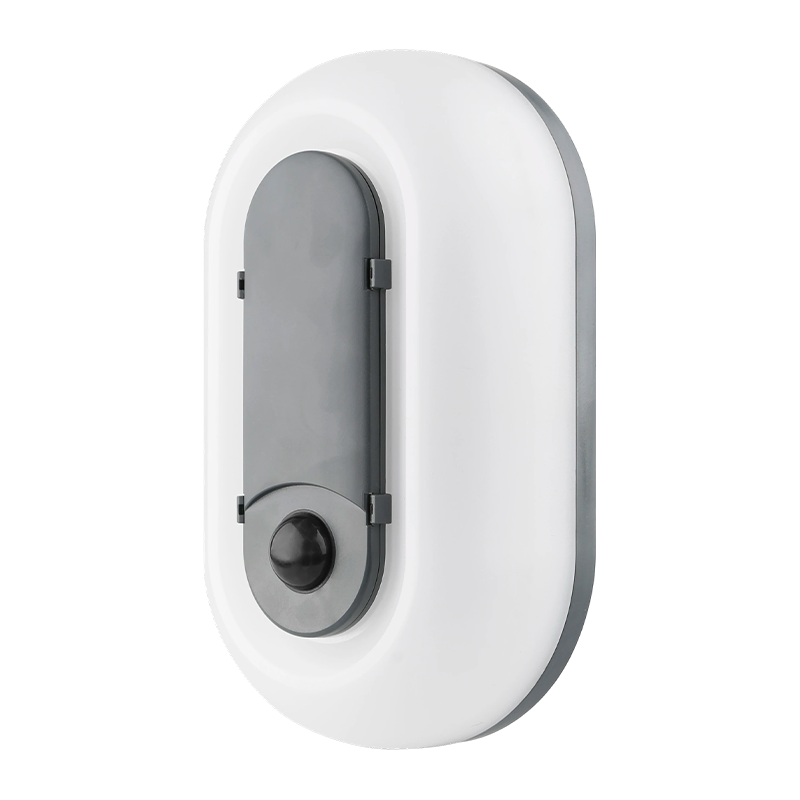
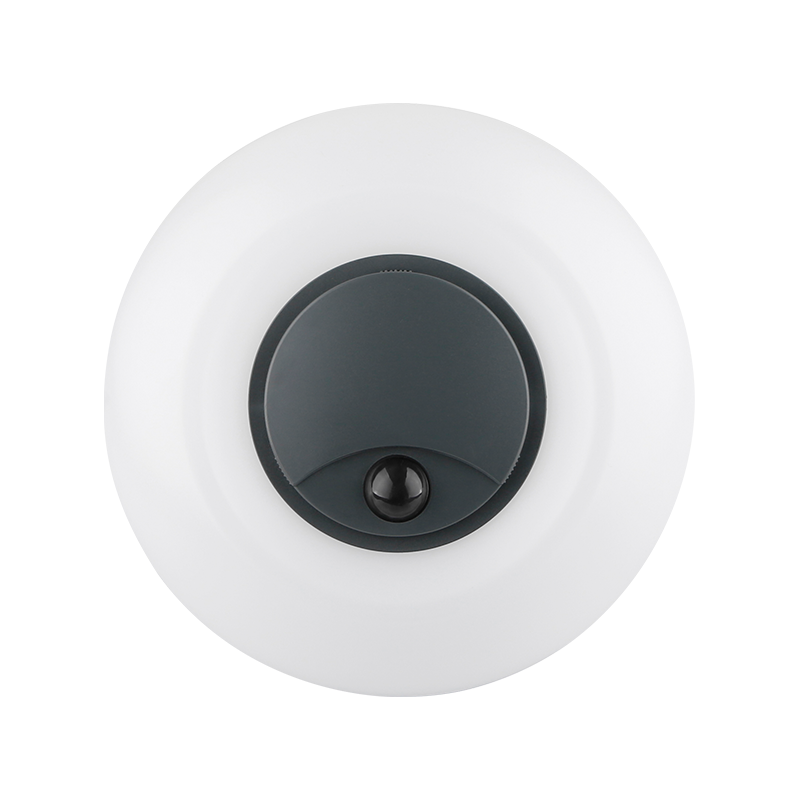
Warehouses are common targets for theft, especially after hours. Good perimeter lighting deters intruders and also improves the quality of CCTV footage. An Outdoor Security Floodlight typically offers the features a warehouse needs: wide coverage, a durable body, and optional motion sensors or photocells.
Color Temperature and Camera Performance
For security use, 4000K to 5000K gives crisp, neutral-to-cool light that cameras capture well, with a color rendering index (CRI) of 70 or above. Warmer 3000K light is gentler on neighbors but can reduce contrast on some cameras.
Controls That Save Energy
An Outdoor Security Floodlight with a dusk-to-dawn photocell turns on automatically and avoids daytime waste. Pairing it with a microwave or PIR motion sensor lets it dim to 20 to 30 percent when the yard is empty and rise to full output when someone approaches. This can cut night-time energy use by 40 to 60 percent on low-traffic walls.
Cost Comparison Over Ten Years
Upfront price is only one piece of the budget. The table below shows an example of covering a 60-meter warehouse wall with fixtures mounted at 7 meters. The figures are illustrative and will vary by region and supplier.
| Cost Item | LED Flood Lights (4 x 150 W) | LED High Bay Lights (6 x 150 W) |
|---|---|---|
| Fixture purchase | $480 | $780 |
| Annual electricity | $394 | $591 |
| Ten-year electricity | $3,940 | $5,910 |
| Replacement risk (moisture) | Low | Moderate to high |
| Estimated total | about $4,420 | about $6,690 or more |
The flood light option needs fewer fixtures because of its wider, aimable beam, which cuts both purchase cost and wiring labor. If high bay lights fail early from water ingress, the real gap widens further.
When a High Bay Light Still Makes Sense
High bay lights are not a poor product. They are simply designed for a different job. There are a few exterior-adjacent situations where one can be the right choice:
- Covered loading bays with ceilings above 6 meters, where the fixture is protected from direct rain.
- Open-sided storage sheds or canopies used for racking or bulk materials.
- Semi-enclosed cross-dock areas where light must fall straight down onto pallets.
Even in these cases, confirm that the fixture carries at least an IP65 rating and a wide operating temperature range, such as -30°C to 50°C, before approving it for use near open doors.
How to Choose the Right Fixture Step by Step
Use this simple process to specify lighting for any warehouse exterior zone:
- Divide the exterior into zones: walls, docks, yards, parking and walkways.
- Set a target illuminance for each zone, for example 10 lux for walls and 50 lux for dock lanes.
- Measure mounting heights and choose wattage using the height table above.
- Pick fixtures rated IP65 or IP66 with at least IK08 impact protection.
- Add photocells and motion sensors to cut energy use and extend LED life.
- Request a photometric layout (IES file) from the supplier to check uniformity before ordering.
A good uniformity ratio, meaning the minimum-to-average light level, is about 0.4 or better for security areas. Flood lights reach that target more easily because their beams overlap smoothly when aimed correctly.
Common Mistakes to Avoid
- Buying by wattage alone: a 200 W fixture with poor optics can give less usable light than a well-designed 150 W unit.
- Ignoring glare: unshielded fixtures aimed too high blind drivers and security cameras. Tilt flood lights no more than 30 to 45 degrees from vertical and add visors where needed.
- Skipping surge protection: lightning and grid spikes are a leading cause of early driver failure outdoors.
- Mixing color temperatures along one wall, which makes the building look uneven and confuses camera color balance.
- Neglecting maintenance: cleaning lenses once a year restores up to 10 percent of lost light output in dusty industrial areas.
Final Recommendation
For warehouse exteriors, LED flood lights are the better fit. They offer the wide, aimable beams, weatherproof construction and flexible mounting that outdoor areas demand. High bay lights remain the right tool for tall indoor spaces and for some covered, protected bays, but they are an awkward and costly choice on open walls, docks and yards.
If you want one dependable specification, choose an IP66-rated Outdoor Security Floodlight with a die-cast aluminum body, built-in surge protection, a 4000K to 5000K color temperature and sensor controls. Where energy rules and long-term operating costs matter, an ERP Class C High Efficiency Floodlight gives you the efficiency credentials to back up the investment. Plan the layout around real mounting heights and target lux levels, and your warehouse will be safer, brighter and cheaper to run for years.